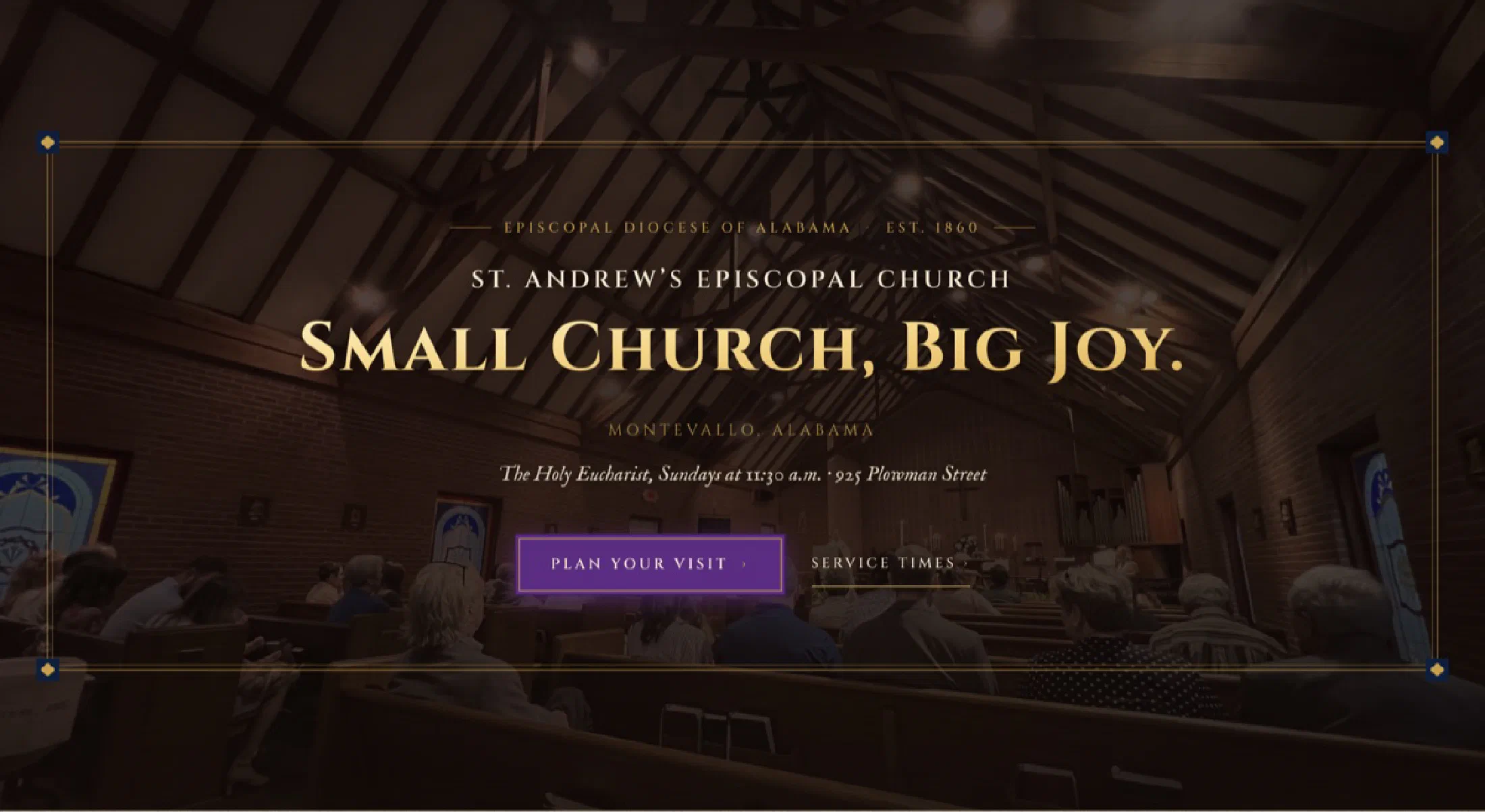
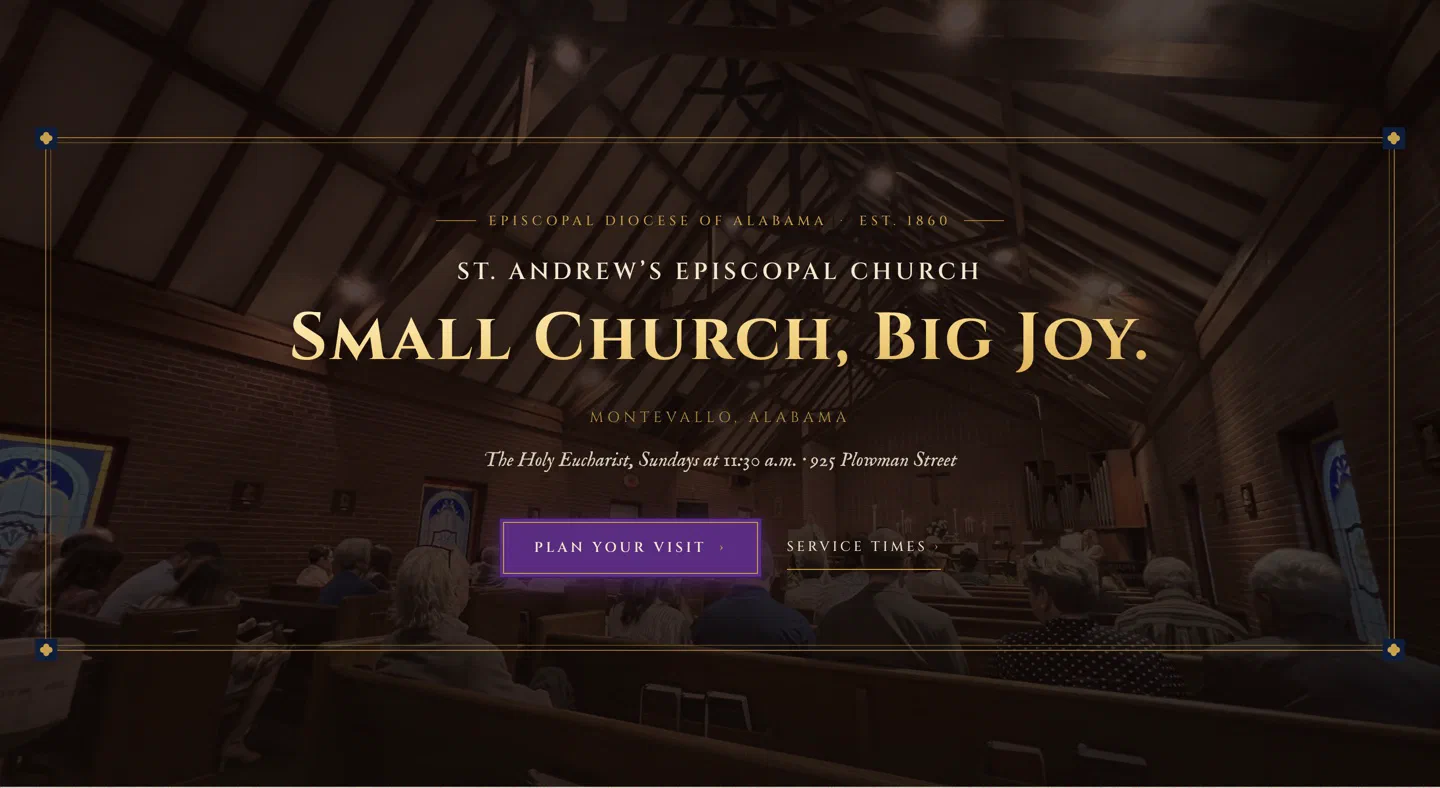
At the corner of Oak and Plowman in Montevallo, Alabama, stands the third St. Andrew’s Episcopal Church that town has known. The parish has worshiped there since 1860. A tornado tore the first building down in 1873. A storm took the second in 1939. Both times the people grieved, gathered, and built again.
I serve on the vestry at St. Andrew’s, so this client was my own church. I was not building for a stranger’s brand guide. I was building for the room where I kneel on Sunday.
The problem: a church nobody could find
Here is the hard truth for churches today, and it is the same truth every small business lives with. People do not find you by driving past anymore. They type a question into Google, or they ask an AI assistant, and whatever comes back becomes their short list. If you are not in that answer, you never get the visit. It makes no difference how warm your welcome is. It is the same problem I solved for a Nashville dealmaker with forty years of accomplishments that search engines simply could not see.
St. Andrew’s had a big welcome and a quiet website. It ran on a default WordPress theme that looked like a default WordPress theme: pink links on a cream page, tiny photos you could not click to enlarge, and a line of text reading “Last Updated: 9/18/2024” typed in by hand. It said very little about the parish, so Google and the AI assistants had very little to repeat. A church that had been rebuilt twice from rubble was invisible in the place where people actually look.
First, make it look like the church it is
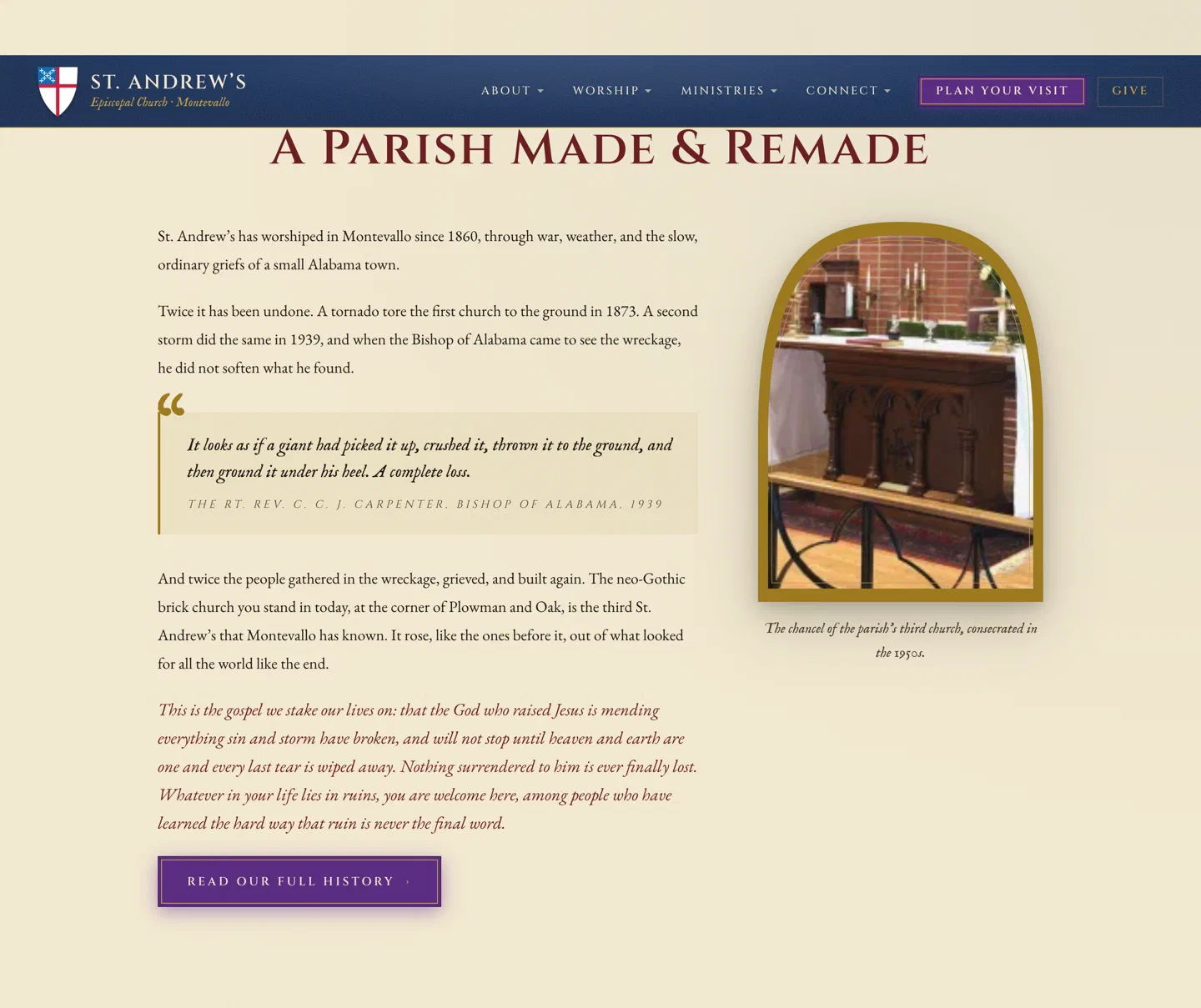
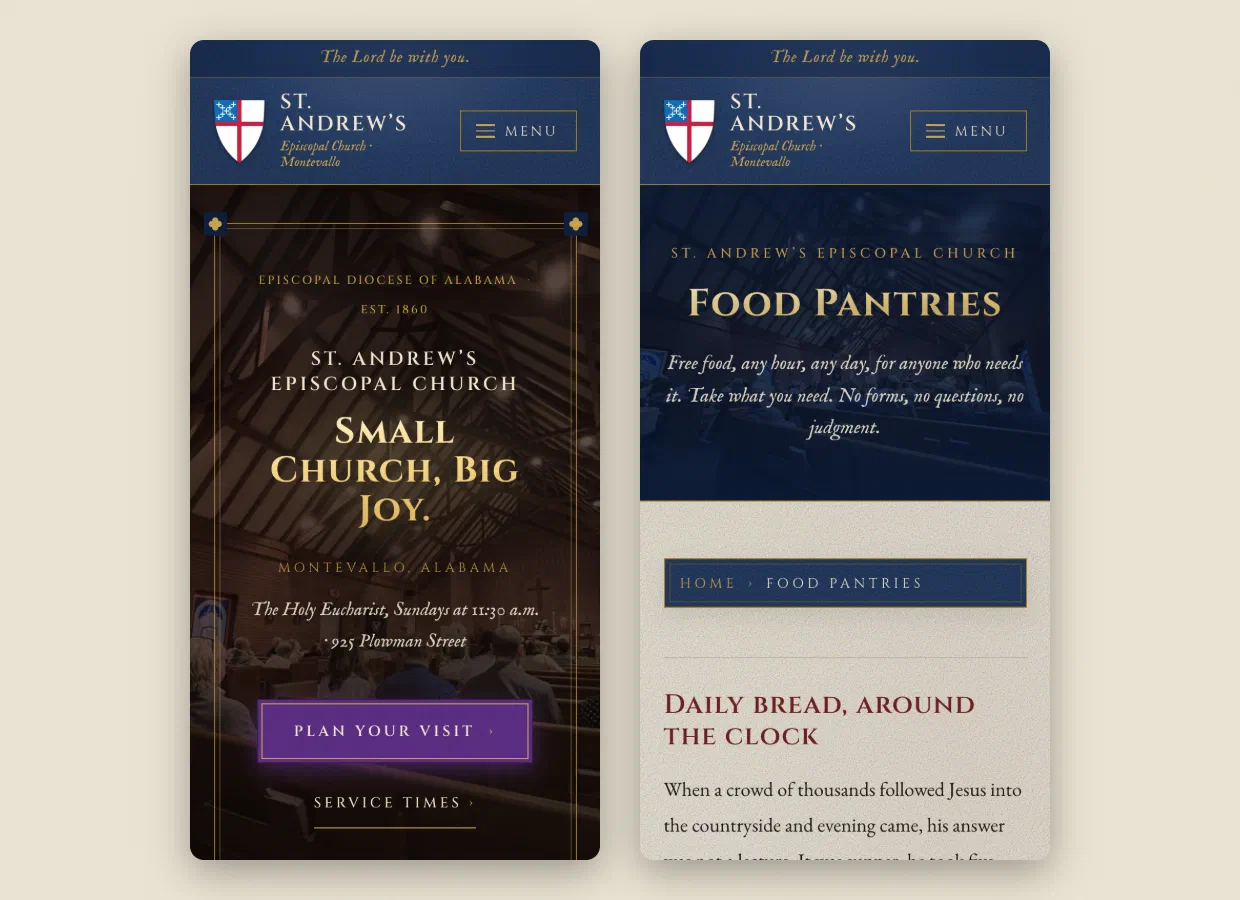
The rebuild started with the feel of the thing. Walk into St. Andrew’s and you see brick, wood, candlelight, and stained glass. The website now looks like that too: warm parchment, deep blue, and real gold. The headings are set in letters shaped like old Roman carving. Photos sit inside golden Gothic arches. At the top of every page, in small italic type, is the greeting you would hear on Sunday: “The Lord be with you.”
Even the big title on the homepage glows with a slow, gentle pulse. The note I left in the code says what I was after: candlelight, not a neon sign.
This matters for more than looks. A default theme tells a visitor “this is a placeholder.” A beautiful one tells them “real people care about this place.” That is brand, and churches have one whether they tend it or not.
Then, say welcome out loud
The words got the same care as the colors. The whole site is written to the person who has never been inside, in plain language. The homepage tells the storm story straight, including the bishop who looked at the 1939 wreckage and called it a complete loss, because this parish preaches that ruin is never the final word, and it has the history to back that up.
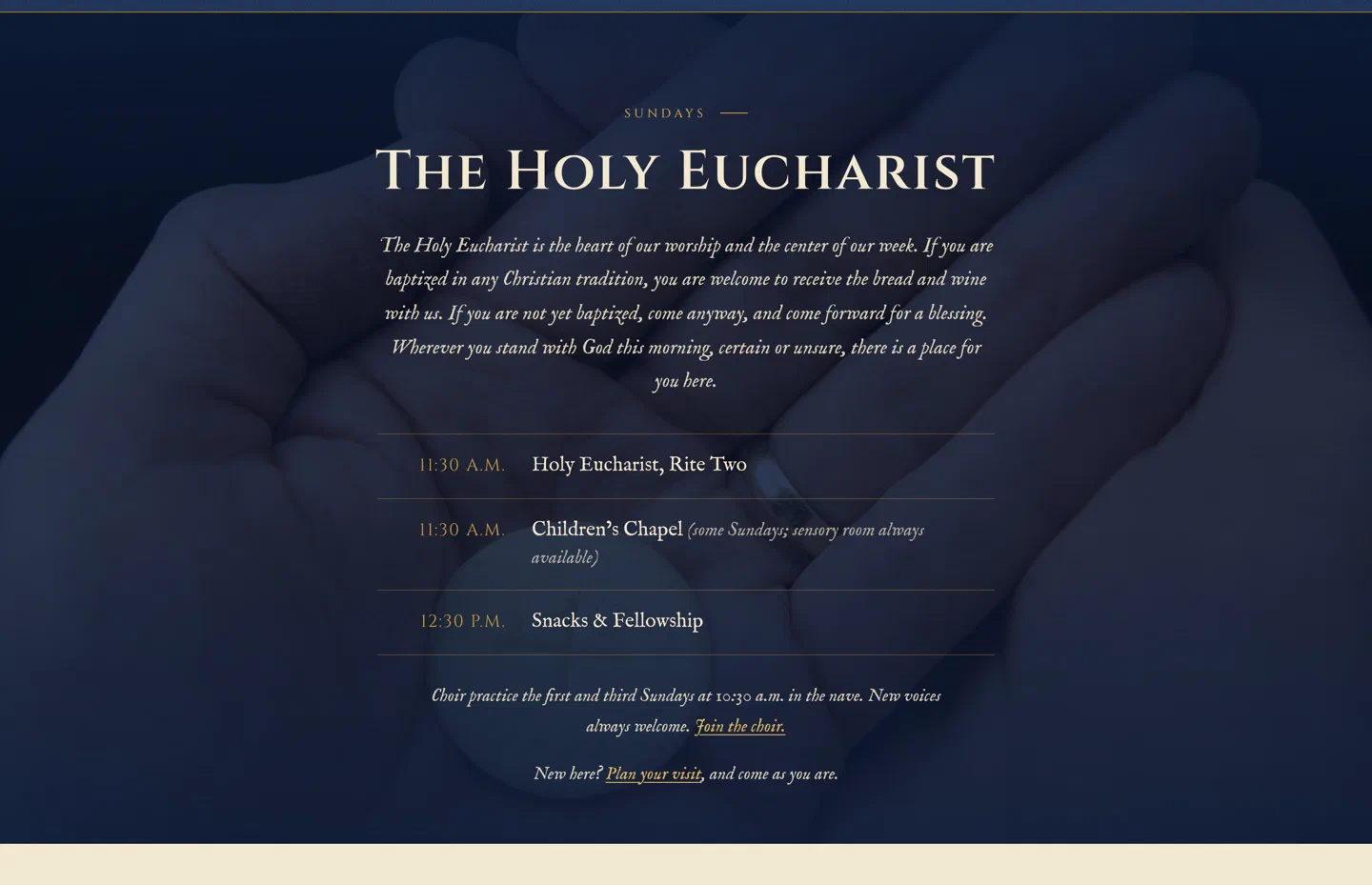
Then the site answers the questions a first-timer is actually nervous about. What should I wear? When do I stand? What happens at the rail? Will my kids be shushed? Six cards answer them one by one. The card about children ends with a line I love: “Young ones are not merely tolerated here. They are welcome.”
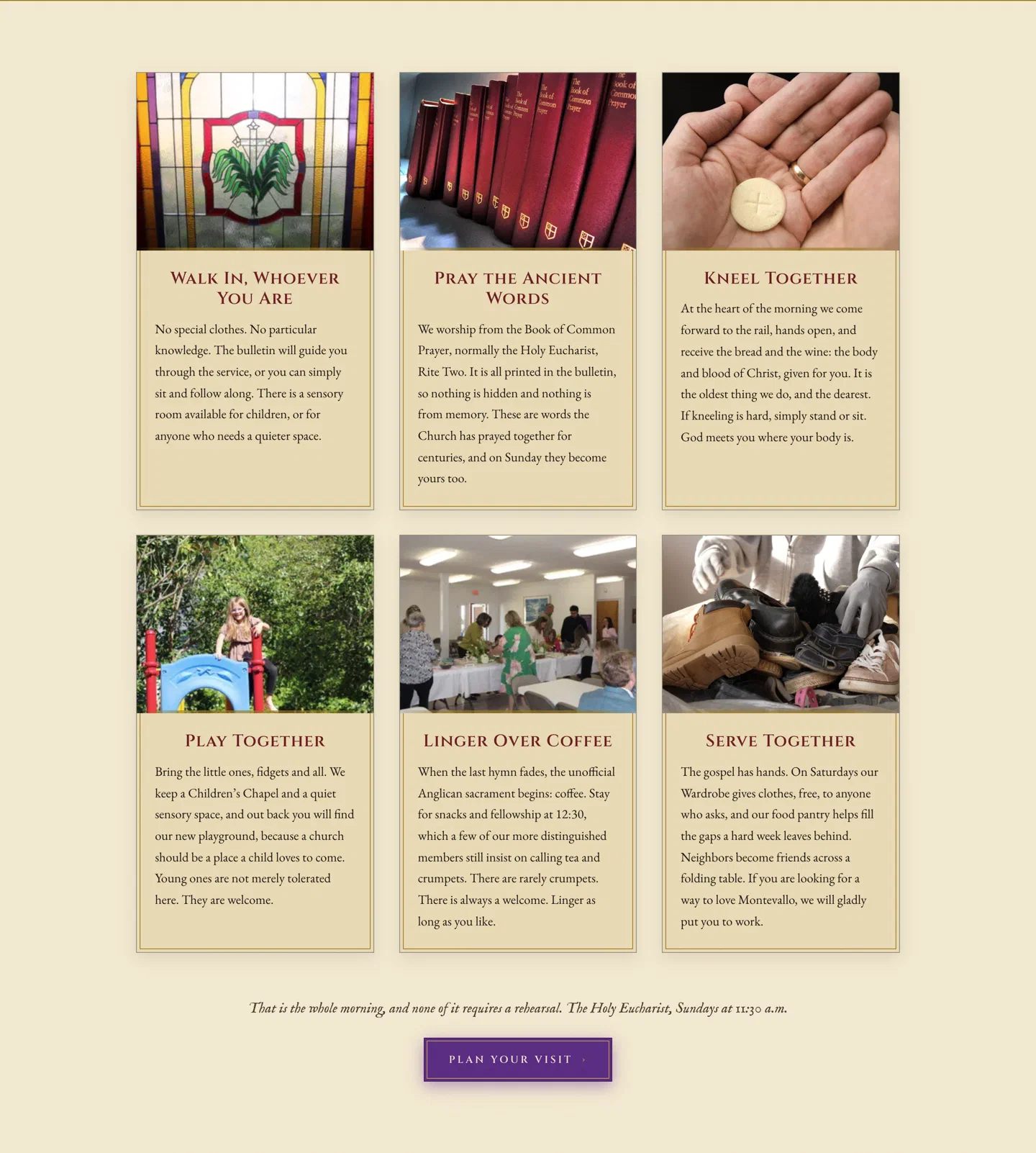
Hold onto that line about children. It comes back at the end of this story.
A map with a little joy in it
St. Andrew’s keeps a food box on the sidewalk in front of the church. Anyone can take what they need, any hour, no forms and no questions. Neighbors keep more boxes stocked in Bibb County. The old site never mentioned any of it.
The new site gives the food boxes a page and a real map, dressed in the parish colors. The pins are gold. The St. Andrew’s pin is royal purple with a soft pulsing halo, and its card pops open on its own so the church reads as home base. Tap any pin and it gives a happy little hop, then offers turn-by-turn directions.
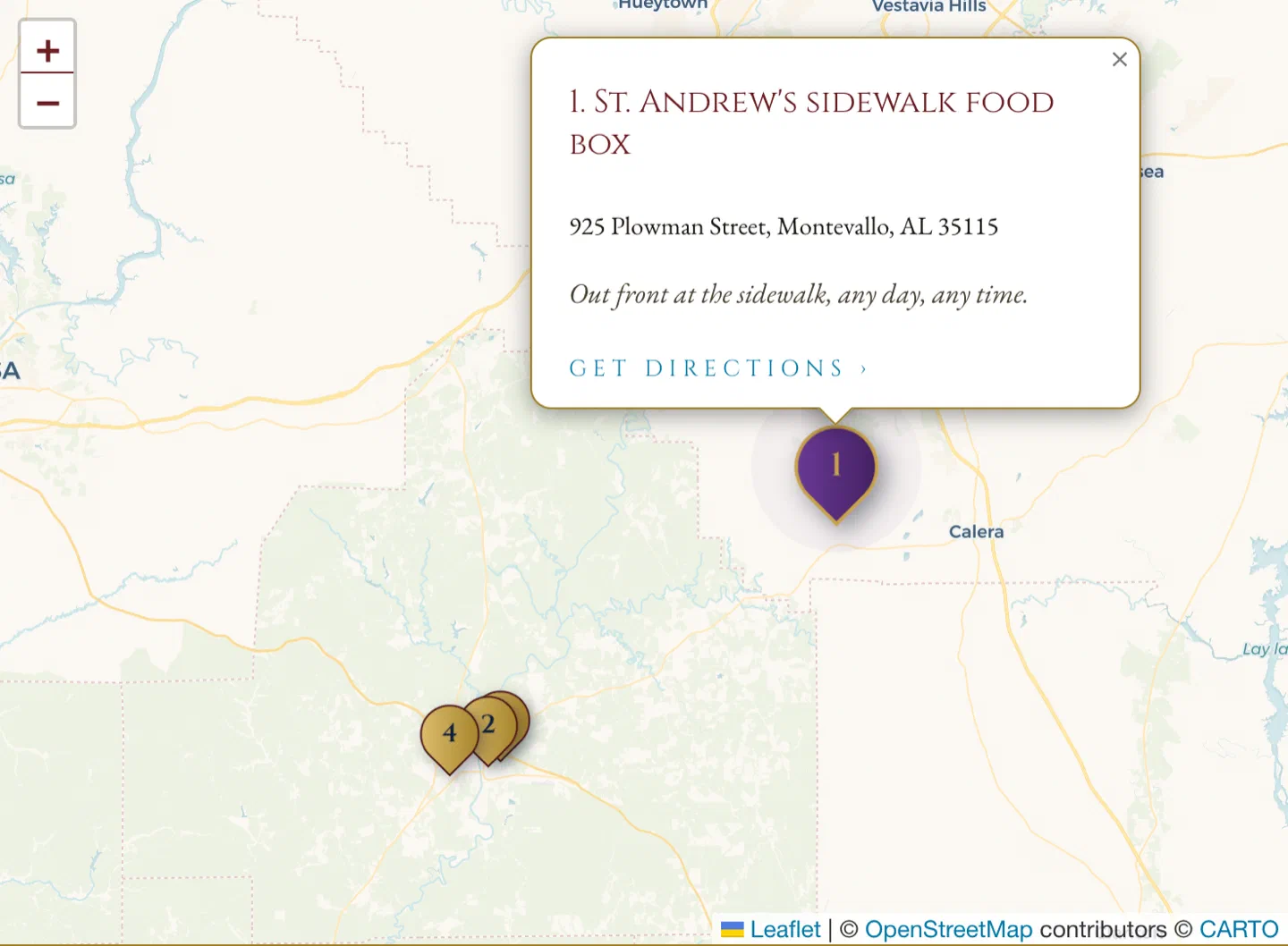
That little hop is the kind of touch most projects skip. It is also the kind people remember. And for anyone whose body disagrees with motion, every animation on the site shuts off when their device asks for calm.
Show the people, because people are the draw
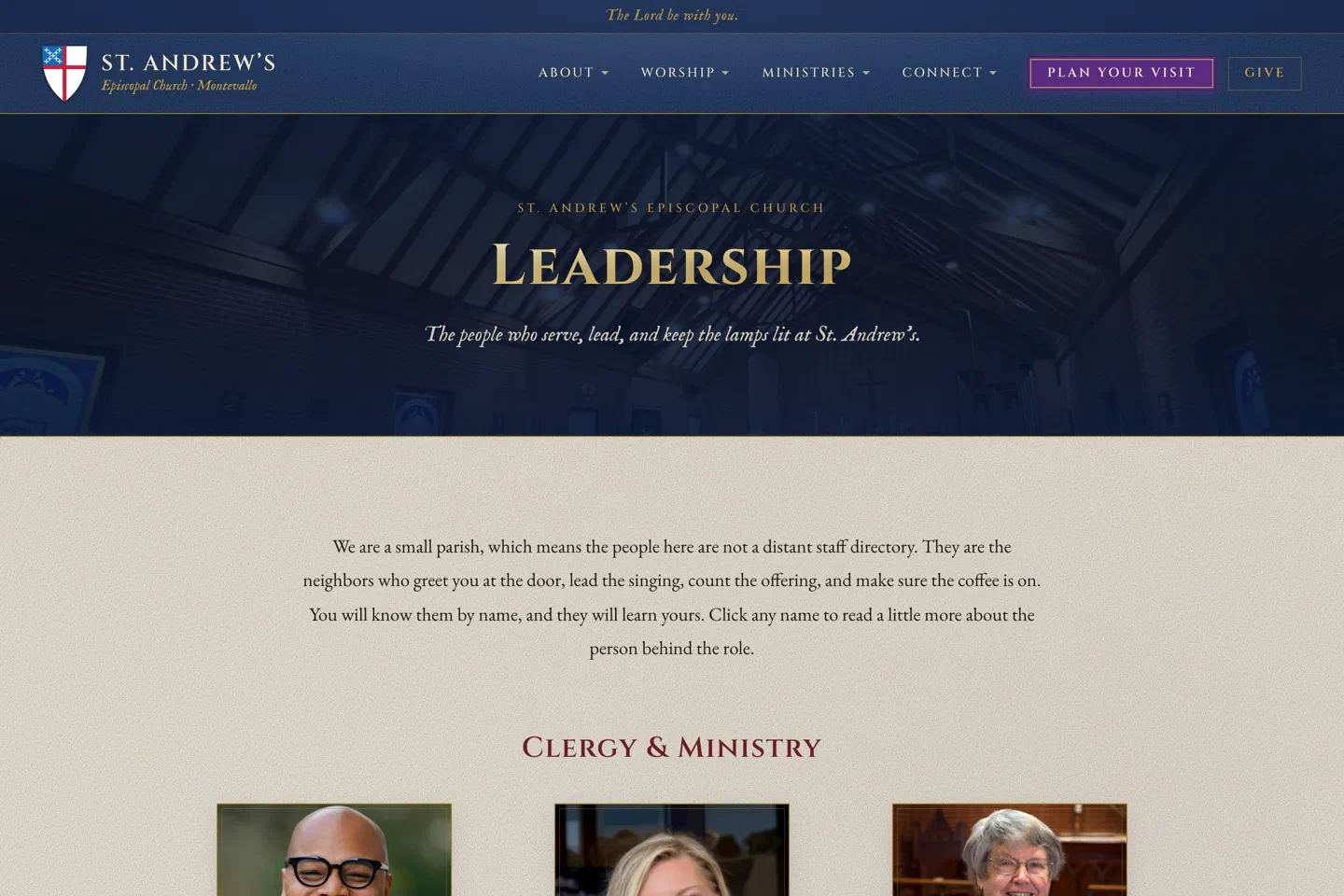
The old site’s numbers told me something useful: after the homepage, the most-read pages were the staff bios. People research people before they visit a church. So every leader got a real portrait and a real story, the kind of things you would learn over coffee in the parish hall.
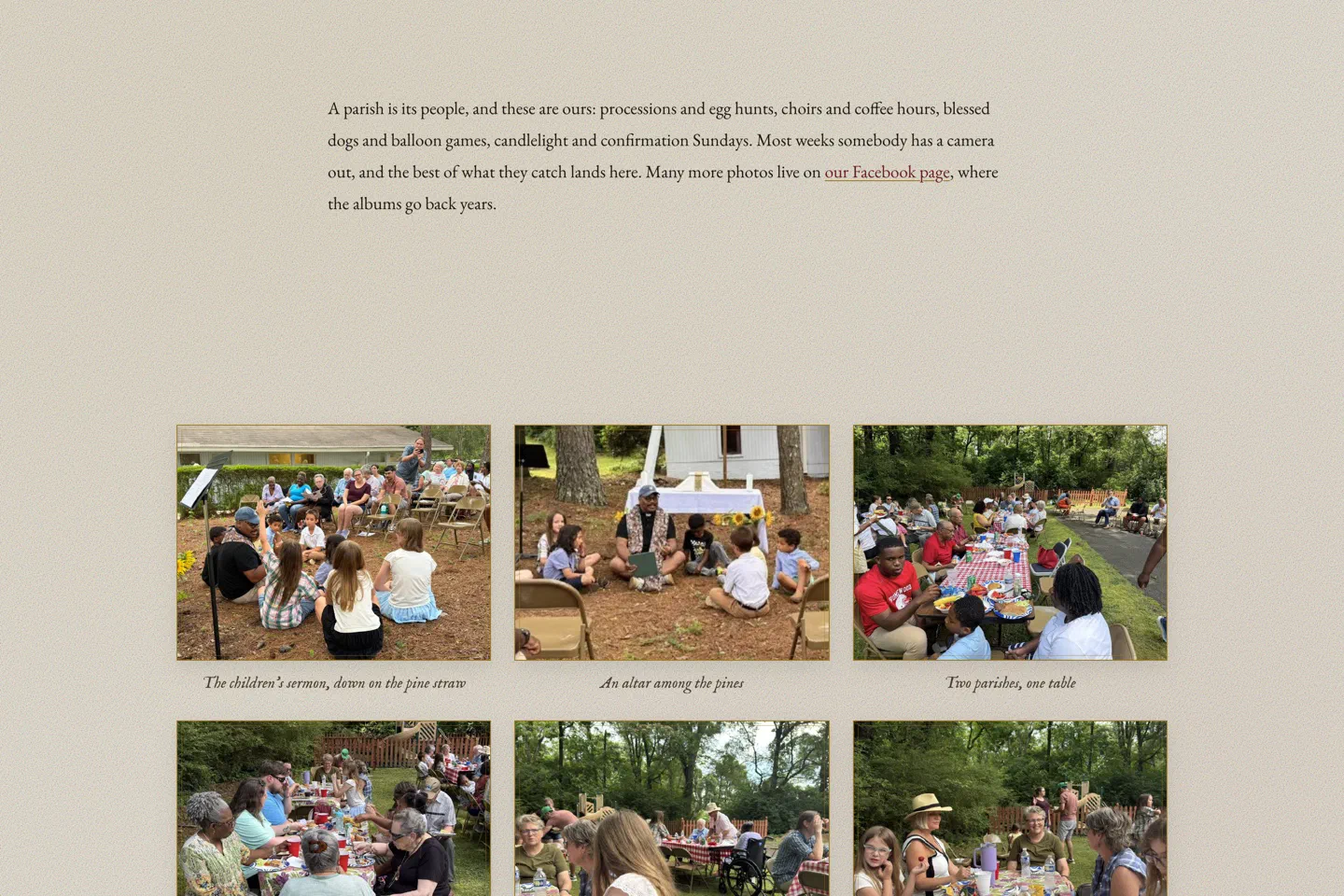
A new photo gallery does the same work. Egg hunts, choir Sundays, an outdoor Mass in the pines with a picnic after. It looks like what it is: a family album.
I also made sure the site works for every body. Every page passes the international accessibility standard with zero errors, so screen readers, keyboards, and low-vision visitors all get the full welcome. A church that says everyone is welcome should be able to prove it.
Finally, make sure the world knows you exist
Then came the quiet work that decides whether any of the above ever gets seen.
Every page title now says Montevallo, so the site can show up when a neighbor searches for a church near them. The service time and street address sit in the first screenful of every page. Old links from bulletins and Facebook posts all forward to the right new page, so nothing anyone ever shared went dead. And the site speaks directly to machines as well as people: a plain summary of the parish sits at the special address AI assistants check, and every page carries data in the format Google and the chatbots quote from. When someone asks an assistant about churches in Montevallo, St. Andrew’s now has an answer on file. I have watched this work before: after the same treatment, Google, ChatGPT, and the other assistants started naming a small Alabama tower contractor at or near the top of their answers.
Honesty about the starting line mattered, too. The old analytics claimed 178 visitors a month. About half were bots. I stripped them out and wrote down the real number, because a number you flatter is a number you cannot improve. Within weeks the site sat in the top three Google results for its own name, with a clear definition of what counts as a win: a direction request, a phone call, a visit.
One week later
Here is the part that makes all of it worth telling.
One week after the new site went live, St. Andrew’s welcomed its first new guest in a good while. They had found the website. What decided them was not the gold leaf or the map. It was the words about families, the promise that children are not merely tolerated but welcome. They read that and decided on the spot that this was where they wanted to be on Sunday. And on Sunday, there they were.
That is the whole case for doing this work. Churches, like businesses, are trying to be found in a world full of noise. The welcome was always real. The building was always open. What changed is that a stranger with a question could finally find the answer, and the answer sounded like the people who wrote it. I suspect that being findable, by search engines and AI assistants alike, will be the catalyst for growth at St. Andrew’s for years to come.
The site is live at standrewsmontevallo.org. Come and see.
Does your church, ministry, or small organization have a story worth finding and a website that hides it? I would love to help. Drop me an email and let’s talk about it.