Plenty of companies still depend on mobile apps built with Titanium, a tool that lets one team write an app once and run it on both iPhone and Android. Those apps carry an odd weak spot on Android. While a list on the screen is moving, the app has no way to know how far the user has scrolled. It learns where the scroll began and where it ended, and nothing in between. On iPhone the position updates the whole time, so the problem usually stays hidden until customers meet it on Android.
That missing information matters more than it sounds. It is what lets an app pin a date or section label to the top of a list, the way a calendar or news feed does. It is also what tells an app to load more items before the reader reaches the bottom. Without it, labels show the wrong section and feeds stall. Development teams usually patch around the gap with guesswork, and the guesses break whenever the content changes.
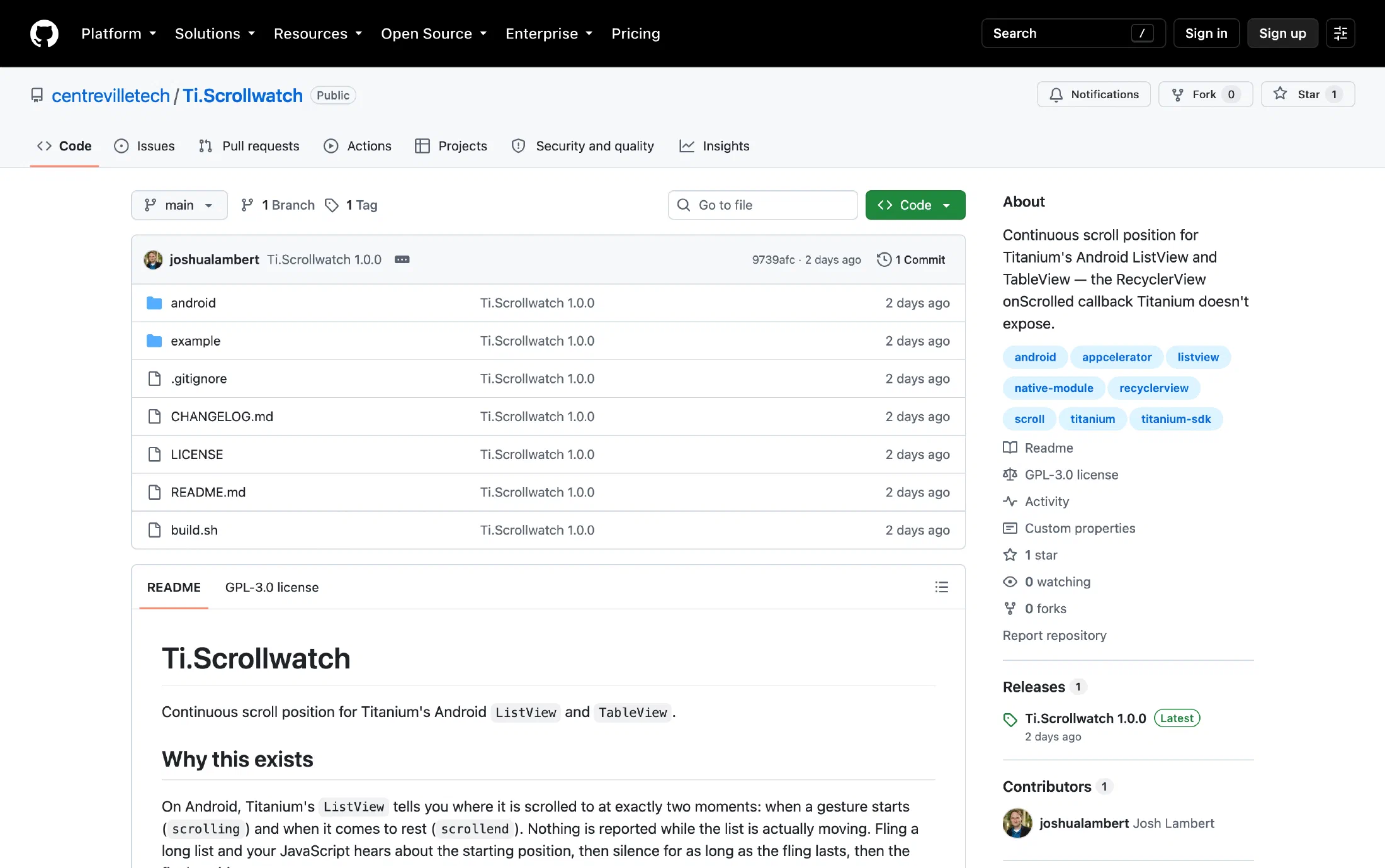
I built Ti.Scrollwatch to close that gap, and I released it free of charge. It is a small add-on that reports the true scroll position straight from Android itself, the moment it changes. It is open source, it works with current versions of Titanium, and a development team can download it from GitHub and have it running in an app the same day.
The module went straight into real use. A nursing home chain runs a Titanium app that shows each home’s activity calendar, the daily list of events and activities for residents and their families. On Android, the date at the top of that calendar could not keep up with the list. With Ti.Scrollwatch in place it stays pinned and correct while the list moves, and the Android app now matches the iPhone app exactly. The short recording below shows it working.
If your company has an app with a problem like this one, bring me in. I work as a third-party consultant alongside your team or on my own, and this is the shape the work takes: find the real cause, fix it, and leave your people able to carry on without me. Send me an email and tell me what your app is doing wrong.