About Me
This is the longer version. The home page has the short one.
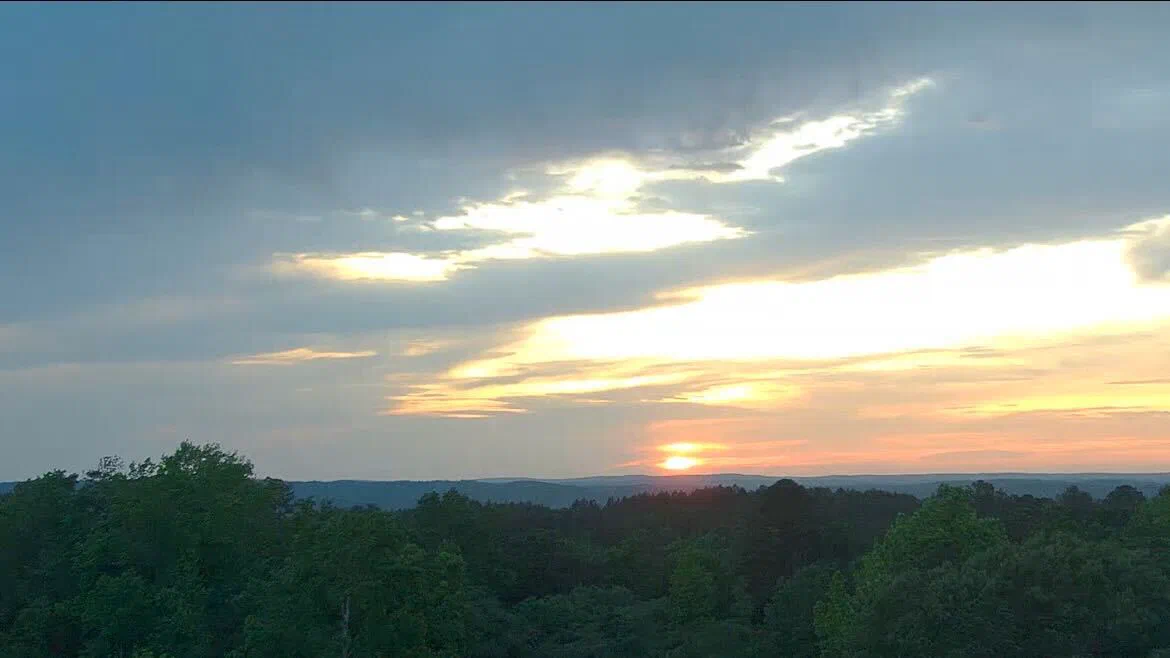
I’m Josh Lambert, Joshua on the birth certificate, though nobody has ever gotten away with calling me that. I live in Centreville, Alabama, a town of about 6,000 people in the middle of the state. I run three small companies, maintain a couple of open source projects, sit on the board of an open source foundation, and write more than I probably should.
I’m a Christian. I’m married. I work from a desk in a small town because I think the small town is the point, not the thing I’m supposed to leave.

My family
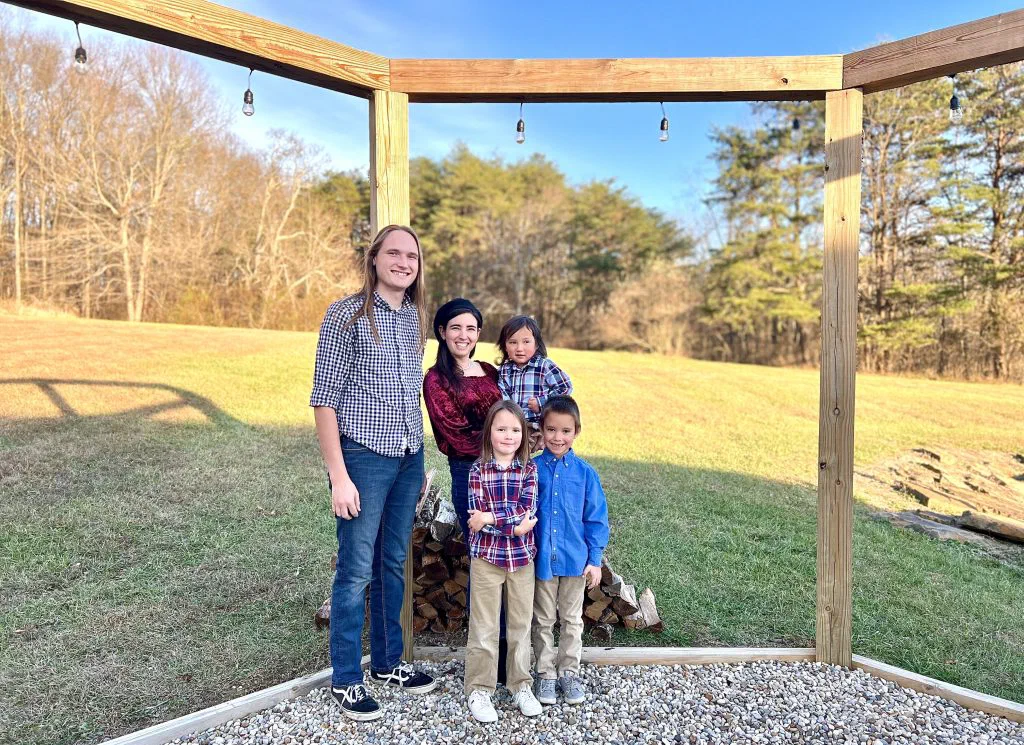
I’ve been married to Kylie since August 2014. She was the girl next door. She’s also been my first and only girlfriend, and now my wife of more than a decade. She’s been one of the only consistent things in my life, the person who stood by me in the good seasons and in the seasons when we nearly lost it all.
While raising our boys, she went back to school and earned her GED and then her associate’s degree in elementary education from Shelton State. I’m proud of her in a way that’s hard to put briefly.
We have three sons, Gabe, Derek, and Evan. A fourth boy is expected later this year.
Church
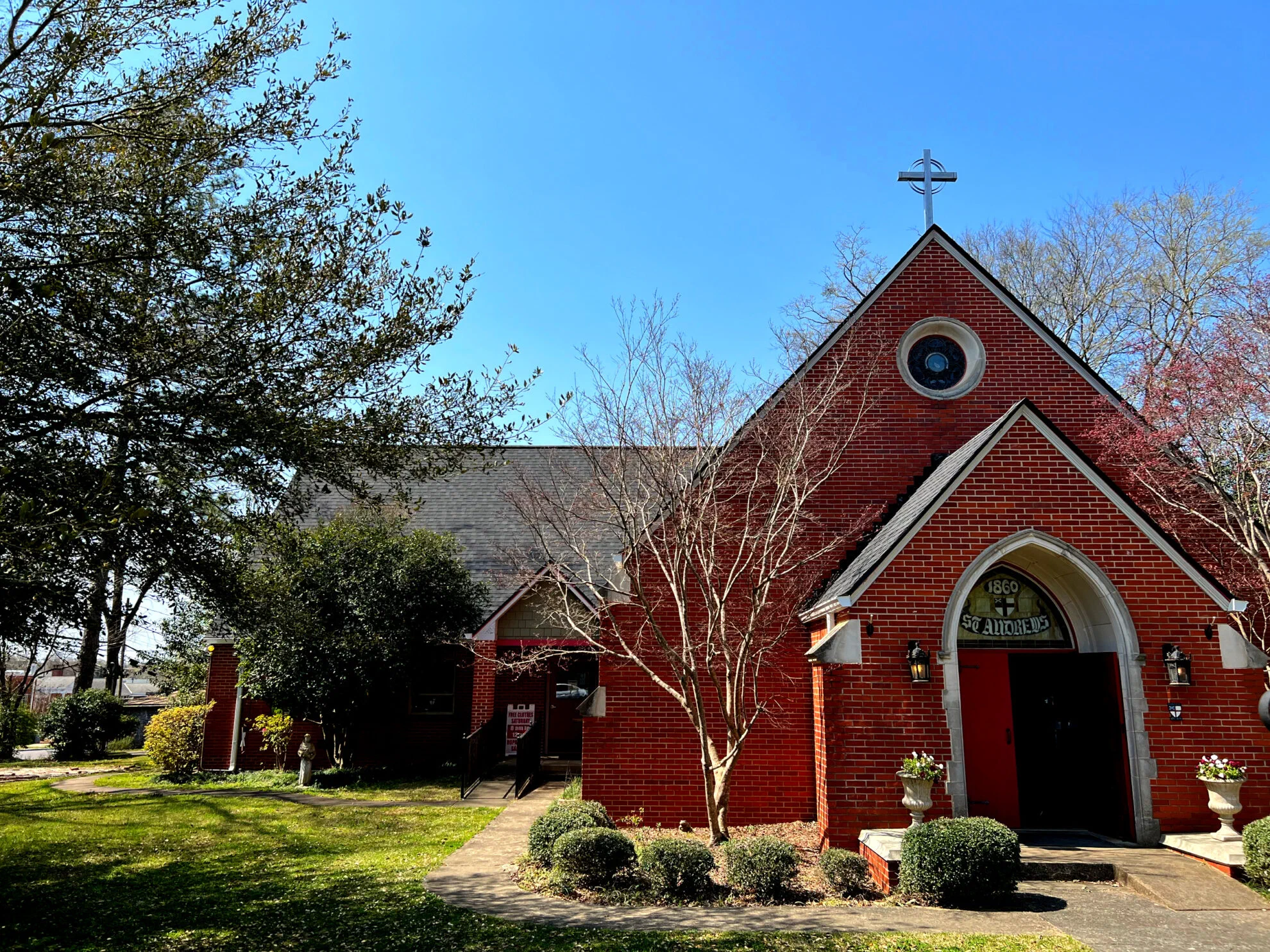
Kylie and I are Episcopalians. We found our way there during the pandemic and stayed. I serve on the vestry at our parish and I manage the church website.
I’m honest about being more conservative than the average Episcopalian on a number of issues. That’s part of why I respect the place. The Episcopal Church holds a big tent, and people who disagree on serious things still worship together on Sunday. Durable institutions are built by people who are willing to stay in the room with each other.
What I’m trying to do with my life
The short answer is that I want to spend my working years building things that make a particular place better and a particular set of people freer, and to do it in a way that holds up over time.
The longer answer goes like this. I take N.T. Wright seriously when he says the work of being a Christian isn’t to escape this world for a disembodied heaven later, but to participate in the slow project of heaven and earth coming together here. That’s not a metaphor for me. It’s the framing under everything I do. Connecting a farmhouse to the internet is part of it. Helping a small business actually get found by the right customer is part of it. Building a company that lasts long enough to outlive me is part of it. Maintaining an open source tool that helps someone in another town build their own network is part of it. Writing essays that make one person think harder is part of it. None of those are cosmic on their own. Together, on a long enough timeline, in the right place, they’re the work.
I moved to Centreville on purpose. The economy and the internet and the culture have all been consolidating toward a small number of large places for a couple of decades, and the places that get left out are written off as backwards or unfortunate. I don’t think they are. I think they’re where some of the most interesting building of the next twenty years is going to happen, partly because nobody’s competing for it, and partly because the small scale lets you actually finish things.
What I believe
These are sharper than the four tenets on the home page. I’ll keep editing this list as my thinking sharpens.
Interesting work can be in the places everyone else left. Geographically, vocationally, and in the parts of the internet that don’t pay well to optimize. Centreville is a position, not a constraint.
Durability beats virality. A small business that lasts thirty years is worth more, in dollars and in human terms, than a startup that lasts three. Most of what’s celebrated online is the second thing pretending to be the first.
Strategy without execution is a deck nobody reads. I’ve watched too many fractional execs hand a founder a 40-slide deck and call it a year’s work. The companies I run all ship the work themselves, on purpose. Advice is cheap. Ships are the unit.
Small over big, almost always. Small businesses, small towns, independent infrastructure, the open web, local economies. The consolidation isn’t inevitable. It’s just convenient for the people doing the consolidating, and it gets sold to everyone else as progress.
Own your tools. The computer in front of you, the phone in your pocket, the software your business runs on, the platform your audience lives on. Renting these things from a handful of large companies is a slow giveaway of the freedom to do the work the way you think it should be done.
Honest work deserves to be findable. A lot of what’s broken about the internet right now is that the discovery layer, search and AI and recommendations, doesn’t reliably surface honest work. I think that’s fixable, and I think it’s worth fixing, and I think a lot of my next decade of work is going to be aimed at it.
Promises matter. If a website says you do something, do it. If a listing says you’re open at nine, be open at nine. If you tell a client you’ll ship Tuesday, ship Tuesday. The single biggest competitive advantage available to a small business in 2026 is keeping your word, because so few do.
Connection is part of the work. The most undervalued labor in the world is the labor of introducing the right people to each other and helping them trust each other. I try to do a lot of it.
What’s shaped me
I read a lot. The writers who’ve shaped me most, in no particular order:
N.T. Wright for the framing of the whole thing. Surprised by Hope and The Day the Revolution Began are the two I’d hand to someone first.
C.S. Lewis for the prose, the imagination, and the sense that intellectual seriousness and warmth are not opposites. The Chronicles of Narnia and his lecture The Inner Ring still rearrange me.
Gary North for the economics, the willingness to argue, and the long-time-horizon thinking. I don’t agree with him on everything, but he models the discipline of taking ideas seriously enough to follow them all the way through. The Detour plugin, below, opens with one of his lines from The Calling, which is as close to a personal manifesto as I have.
I’ll add to this list as it makes sense.
What I do for work
Three companies, each with one job.
Centreville Tech is the firm I run for fractional CMO and delivery work. We take on B2B companies that need a senior marketing leader and a team that can actually ship the website, the app, the campaign, the landing page. One engagement, not three vendors.
The Edge Mile is the consulting practice for private networks, LTE and 5G integration, and Nokia hardware. It’s the technical, infrastructure-flavored half of my work, and it sits next to but separate from Centreville Tech.
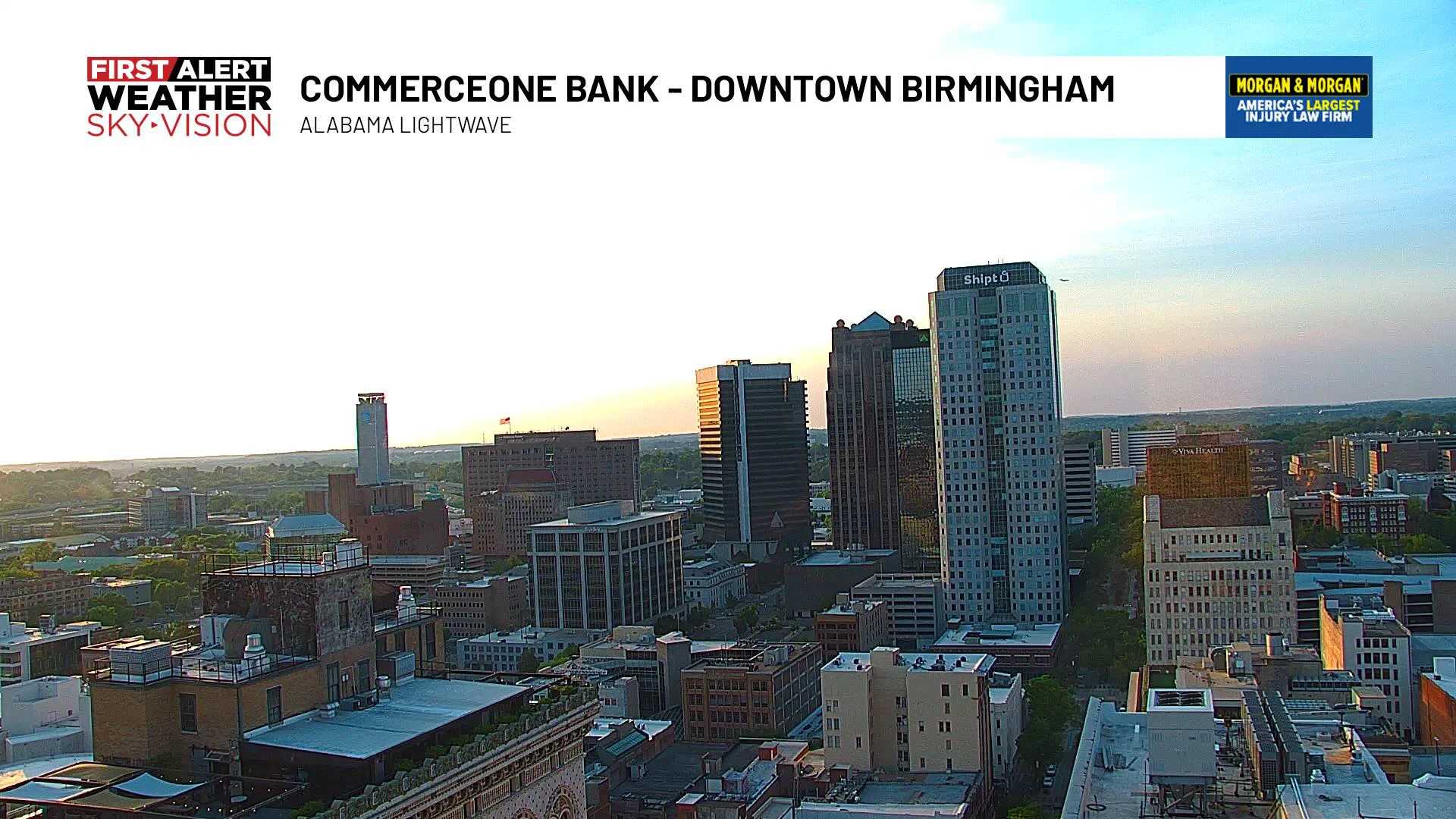
Alabama Lightwave is the WISP. We sell internet, circuits, managed IT, and DIA to homes and businesses in our footprint. It’s the most operational of the three and the most local. It’s also where the weather camera network lives.
What I’ve built that I’m proud of
Rapid5GS is an open source toolkit that turns the painful, multi-day process of standing up a production Open5GS mobile core into a single command. It’s the kind of tool I wish had existed when I was learning, and it now powers private LTE deployments for operators who couldn’t otherwise afford to be in the game. The Pro version funds the open source work, which I think is the right model for tools like this.
Detour is a free, open source WordPress plugin that catches every 404 on a site and routes the lost visitor somewhere that converts. It started as a fork of an older plugin thousands of WordPress sites still depend on. We forked it because the original had drifted into bundling commercial JavaScript without a license, injecting backlinks into customer emails, and falling over on logs past a million rows. We tore the cargo out, rebuilt the parts that needed it, scaled the database properly, and put it back out under GPL-2.0-or-later. Free forever, no telemetry, no Pro tier waiting in the wings. The opening section of the site quotes Gary North’s The Calling on going where you can elevate the field. That’s the assignment.
TiDev, Inc. is the 501(c)(3) software foundation I chair. We steward Titanium, the open source cross-platform mobile development framework. Titanium was originally launched in 2008 with more than $90 million in venture funding, eventually wound up at a publicly traded company called Axway, and was abandoned by them in early 2021. A working group of long-time Titanium developers, myself, Jason Kneen, Chris Barber, Sebastian Klaus, Ray Belisle, and Richard Lustemburg, put together a community foundation, got 501(c)(3) approval, and Axway transferred the IP and the repositories to us in April 2022. We’ve shipped community releases ever since. The foundation is registered in Bibb County, which means a piece of mobile development infrastructure that thousands of apps depend on now lives, legally and operationally, in my hometown. That tickles me to no end.
What I support and why
MGMix, the Montgomery Internet Exchange, is the only IXP in Alabama and one of only four in the entire Southeast. It exists because a few stubborn people in Montgomery decided Alabama’s internet traffic shouldn’t have to fly to Atlanta and back. Alabama Lightwave is a peering partner. I support MGMix because it’s a literal example of the worldview: small, local, independent infrastructure that makes the internet better for an entire region without asking permission from any of the giants.
WISPA, the Wireless Internet Service Providers Association, is the trade group that represents independent wireless ISPs in Washington and across the industry. I’m a member, and these days I’m one of the few WISPA members left in Alabama. I’ve publicly critiqued WISPA when I thought they were getting strategy wrong, the open letter on AI search and broadband visibility is one example, and I’ll keep doing it when I think it matters. I do it because I want them to win. The independent wireless ISP industry needs an institutional voice, and WISPA is the one we have. If you run a WISP or a WISP-adjacent business, please join. The organization is more useful when it has more of us in it, and the criticism lands better when it comes from inside the tent.
I also try to support, in smaller ways, the broader ecosystem of independent operators, open source maintainers, and small-town builders who are doing the same kind of work. If that’s you and we haven’t talked yet, we probably should.
A boyhood dream, side door
I grew up wanting to be a meteorologist. That’s not a sentence most people end up writing on an adult about page, but it’s true, and it explains more about me than I’d usually admit. I never went to school for it, and I didn’t become one.
But I get to live the dream a little sideways. Alabama Lightwave is building out a network of weather cameras across our footprint, and we do that work in collaboration with Wes Wyatt, the Chief Meteorologist at WBRC in Birmingham. So a kid who grew up wanting to chase storms on TV ended up in his thirties helping a real on-air meteorologist see weather better.
What I’m working on right now
I’m deep in SEO, GEO, and LLM optimization. Not the gaming-the-algorithm flavor. The honest version: how does a small business that does real work get found by the people who actually need it, in a search environment that’s being rewritten in real time by AI? Most of what I’m writing this year traces back to that question, and most of what I’m building at Centreville Tech does too. Detour is part of the answer at the WordPress layer. There will be more.
I’m also writing more than I used to and starting to take occasional speaking and podcast invitations. Some of the writing is policy, rural broadband and the FCC and BEAD. Some of it is theology. Some of it is just me trying to think clearly about something out loud. If you run a podcast or a conference and any of that lines up with what you’re doing, get in touch.
What I use
Because people ask, and because the tools are part of the worldview.
Computer. I run Omarchy on my main machine. It’s DHH’s Linux distribution, built around Hyprland, designed for people who want to actually own their computer instead of renting it from a vendor. I use it because I agree with the premise.
Phone. GrapheneOS on a Pixel. De-Googled Android. Same instinct.
Writing and the web. Self-hosted, RSS-first, my own domain, my own email list. The independent web is worth keeping intact, and I try to live there.
Things I like
A starter list. I’ll keep adding.
- Hospitality as a discipline
- Long talks with a friend or two, whiskey and a cigar
- Lectures on YouTube
- Small-town diners
- The sound of a working network humming
- A clean radar loop on a stormy afternoon
- Working in the morning before anyone else is awake
- Tools that last longer than their warranty
- People who keep their word
- The first cool morning in September
How to reach me
The fastest way to get my attention is to write me a thoughtful email. The second fastest is to read something I wrote and reply to it.
If you want to hire me, click the company on the home page that fits the work. If you want to talk about something I wrote, or you have something for me to read, or you want me on a podcast or stage, the contact page is the door.
What this page is and isn’t
This page is going to keep changing. It’s not a resume. It’s a working document about what I’m trying to do and why. If you find a contradiction in it, that probably means I’m still figuring something out.
Thanks for reading this far.