

Do you remember 2010? We were all playing Angry Birds, wearing Silly Bandz, and watching a 16-year-old Canadian kid with a swooping haircut take over the planet singing “Baby.” Justin Bieber was the new hotness. If you didn’t have Bieber fever, you were irrelevant.
A few years later, that haircut aged about as well as a Facebook FarmVille invite.
The fixed wireless industry might have the same problem.
Spend enough time around WISP Talk or operator Slack channels and the pattern is impossible to miss. A vendor launches a proprietary platform. It promises the world. Operators deploy it everywhere. Roughly four years later, the End-of-Life notice drops. Support dries up, interoperability never existed, and migration paths are nowhere to be found.
Suddenly, you’re staring at a warehouse full of expensive plastic that can’t talk to anything else.
You’re holding boat anchors.
The Proprietary Trap Driving the Race to Ludicrous Speed
It’s a cycle we’ve all seen. You build around a platform, the vendor pivots, and because everything is proprietary, there’s no graceful exit. No gradual migration. Just a forced rip-and-replace.
It feels a lot like that scene in Spaceballs when Dark Helmet orders the ship to go to “Ludicrous Speed.” We keep jumping from one tightly coupled solution to the next, moving faster each time, but with less control and fewer options.

At the same time, we’ve hit diminishing returns on raw speed. In a market increasingly saturated by fiber, marginal performance gains from proprietary platforms don’t carry the weight they once did. There was a period when higher speed tests genuinely differentiated providers and helped win customers. With fewer alternatives, the trade-off made sense.
That environment no longer exists.
Today, a BEAD-funded fiber overbuilder can arrive and match or exceed those speeds regardless. In that reality, short-term marketing wins matter far less than long-term flexibility, interoperability, and cost control. What once felt like a reasonable compromise now carries a much higher opportunity cost.
In 2026, the calculus has changed. Ignoring that shift is no longer just expensive. It’s strategic risk.
Acknowledging the LTE Growing Pains
To be fair, many WISPs didn’t choose proprietary lock-in because they loved it; they chose it for survival. We have to be honest about the fact that many operators got burned by early LTE deployments that simply weren’t ready for prime time. Whether due to rushed R&D or premature launches, the market was flooded with hardware that failed to meet its own specifications, leading to massive performance headaches and stranded capital.
This didn’t just hurt our bottom lines; it damaged our reputation. These botched deployments likely contributed to why some grant offices are hesitant to take wireless seriously today. When regulators and bureaucrats see a trail of underperforming networks, it sours the taste for the entire industry.
For many, retreating into a stable, well-supported proprietary ecosystem was the only way to keep the lights on and the customers happy. There is no shame in having sought that stability. Those closed-loop solutions provided the refuge that early 3GPP gear lacked. However, as the technology has matured, the core ideas of 3GPP now represent a stabilized, functional path forward. The goal isn’t just to find “standards,” but to find standards-based products that actually work.
The Beauty of Interoperability
The contrast between the proprietary “WISP gear” world and the 3GPP standards-based world today is night and day. In the land of open standards, I am the master of my own destiny, not a captive of a vendor’s product roadmap.
Take a look at my towers today. I’m running a mix of Nokia AZQC radios and Baicells 436Q radios. In a proprietary world, mixing two brands like this on the same network could be impossible. But because they speak the universal language of LTE/5G, they coexist perfectly. My customers can use Nokia FastMiles and Global Telecom Titan 4000s interchangeably. Plus many other UEs available today in 2026. No lock-in anywhere to be found here.
The Core Flexibility
This freedom extends all the way to the core. My journey through the EPC (Evolved Packet Core) landscape proves that when you stick to standards, you aren’t locked in.
- I started on Druid.
- I experimented with Magma.
- Ultimately, I landed on Open5GS-based solutions, with Rapid5GS Pro running my towers today.
Because the interfaces are standardized, changing cores didn’t require a rebuild of the network. The radios stayed in place. I pointed them at a new IP and moved on.
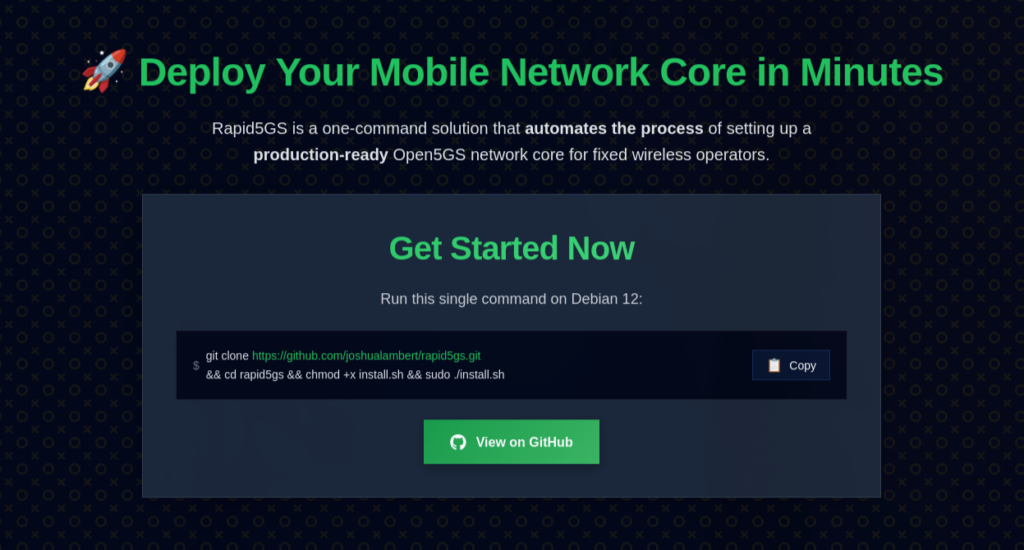
If one core platform stops being the right fit, there are others available. Solutions like Pente’s HyperCore or Hawk Networks’ KeyLTE can be evaluated and adopted based on operational needs, scale, or support requirements. The key point is that none of these choices are irreversible.
That’s the real advantage of standards-based LTE and 5G. They give operators the ability to change direction without starting over. In a broadband market that keeps shifting, that kind of flexibility is what allows networks to endure.
The End of the “Grant Era” Economics
For the last few years, we’ve been living in a distorted reality. Massive government grants like BEAD and RDOF created a buffer. If a vendor EOL’d a product line, some operators might’ve figured, “Whatever, we’ll just rip-and-replace with Uncle Sam’s money.” This market interference propped up the walled gardens, allowing proprietary soultions to survive despite their anti-competitive cycles. I touched on this market distortion in my Backhoe Bonanza and Poisoned Goblet articles.
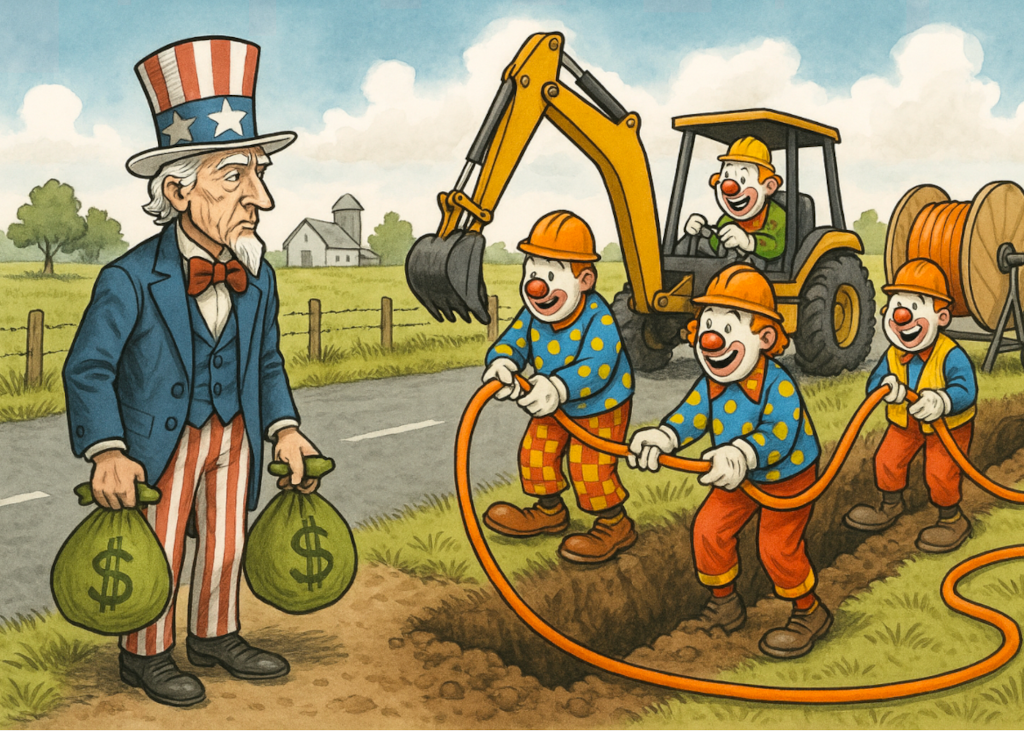
That era is ending. Grant money is tightening, and unit economics are drifting back toward the harsher reality of the free market. In that environment, repeatedly “going to plaid” with every new proprietary platform simply isn’t sustainable.
For an independent WISP without private-equity backing, long-term survival in a post-subsidy world increasingly comes down to two paths: fiber, or open standards. In many rural markets, the cost and timelines associated with fiber-to-the-home remain a non-starter. That leaves LTE and 5G, built on open, interoperable foundations, as one of the few practical alternatives.
And that assessment ignores an important upside: by embracing LTE and 5G, operators aren’t just choosing a more flexible access technology. They’re also positioning themselves to participate in the mobility market, opening doors that fixed, proprietary platforms never will.
Conclusion: Castles Made of Sand
The proprietary model is a form of engineered chaos. It locks operators into perpetual capital expenditure in service of the vendor’s roadmap, not long-term system health. When we ignore this reality and continue chasing the latest closed-box “new hotness,” we end up living out the irony captured by Jimi Hendrix’s Castles Made of Sand. We build ambitious systems on foundations that quietly shift beneath us, only to watch them erode when the tides turn. Sometimes that tide arrives as an abrupt EOL notice. Other times, it comes via a quarterly earnings call that rewrites the rules without warning.
There was a time when proprietary solutions were the only practical way to deliver reliable service. That time has passed. In 2026, the hardware has matured, the ecosystem has stabilized, and the industry has learned some hard lessons. The foundation provided by 3GPP has proven durable, and the number of viable, interoperable deployment paths has never been greater.
We no longer need to build castles in the sand.

“And so castles made of sand
fall in the sea eventually” – Jimi Hendrix
Enjoyed this article?
Enter your email below to get notified when new posts go live.
Leave a Reply